
It is a quintessentially Italian success story, with a decidedly twenty-first-century complication. A familiar object, refined through generations of design, becomes the vehicle for a new technology. Consumers embrace it. Regulators start asking questions.
This time, the object is a pair of glasses.
As Reuters reports, the success of Ray-Ban Meta smart glasses is colliding with growing privacy concerns. EssilorLuxottica, the Franco-Italian eyewear group, sits at the centre of that argument.
The commercial numbers are striking. According to figures from Omdia cited by Reuters, global shipments of AI-enabled glasses rose from about 2.1 million in 2024 to 8.4 million in 2025. The Meta glasses produced with EssilorLuxottica represented 81.3% of global shipments in the first half of 2026. That is a significant lead in a product category that several technology giants hope could one day challenge the smartphone.
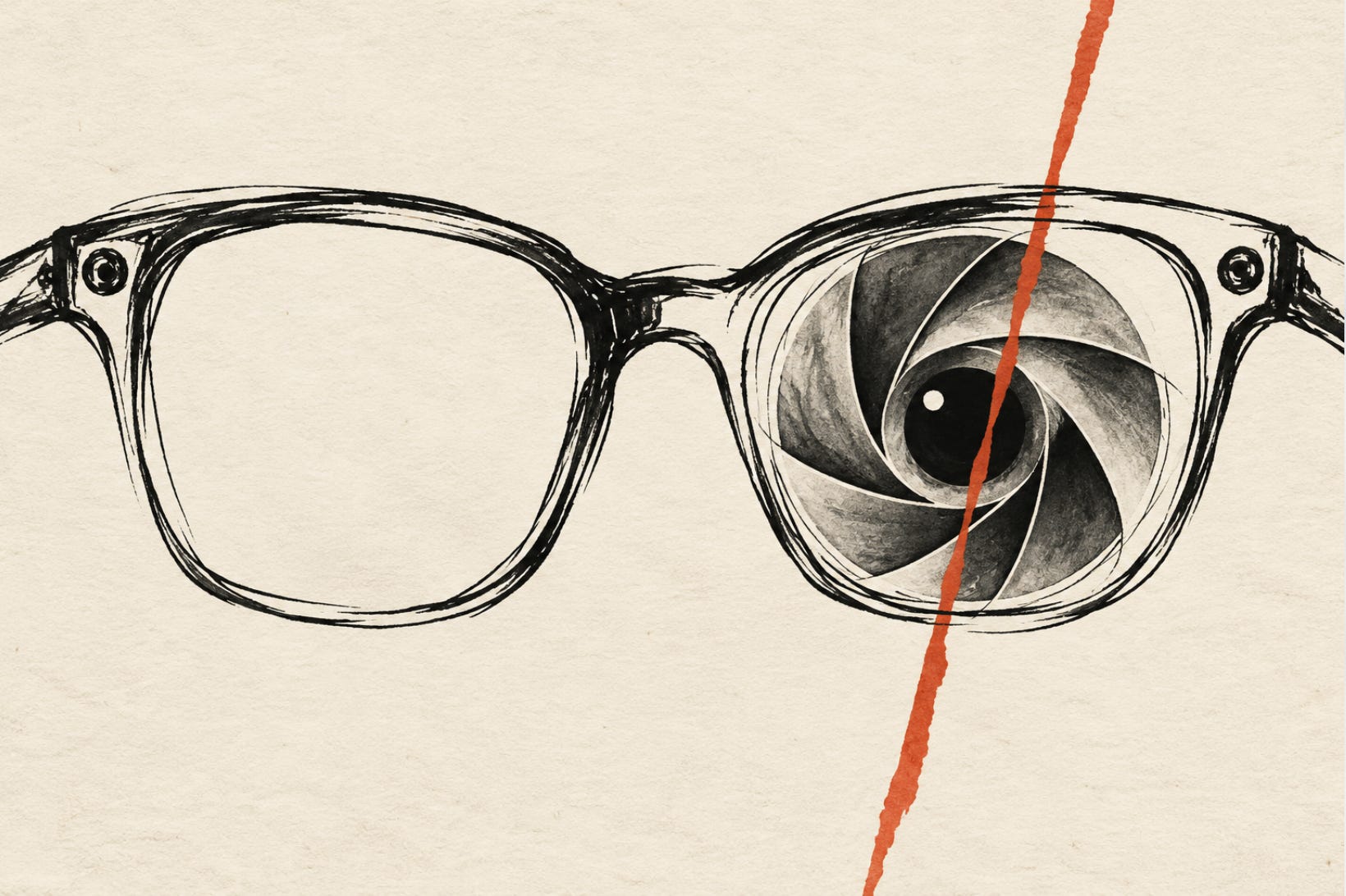
The reason for the glasses’ popularity is also the reason for the controversy: they look like ordinary eyewear. The technology is no longer strapped conspicuously to a user’s head. A person can wear a fashionable frame while taking pictures, recording video, making calls or using AI features. Yet the people standing nearby may not know what is being captured.
European privacy authorities are considering how to respond. Reuters reports that the European Data Protection Board has advocated clearer recording signals and other safeguards. Norway has considered restrictions in selected settings; Italian and Austrian regulators have examined incidents involving pupils using smart glasses in schools. This is scrutiny, not an EU-wide ban, and the final regulatory outcome remains uncertain.
The irony is delicious. Italian design has spent decades making complicated things appear effortless. Now that very talent has helped make a complicated ethical issue almost invisible. The challenge for EssilorLuxottica and Meta is not simply to sell a clever product. It is to persuade the public that the product can coexist with ordinary expectations of consent and personal space.
There is a larger question here, too. In the next generation of consumer technology, the battle may not be won by the company with the most powerful chip. It may be won by the company that finds the best compromise between usefulness, desirability and trust.
THE ITALIC TAKE
We Italians have spent generations making perfectly ordinary objects look irresistible. Now one of those objects can record the people sitting opposite us at dinner.
Perhaps the next great design breakthrough won’t be making a camera less visible. It will be making consent more visible.
After all, when even your spectacles are watching, someone really ought to ask who is looking.
ITALIC — Set in bold. From Italy without geography.