
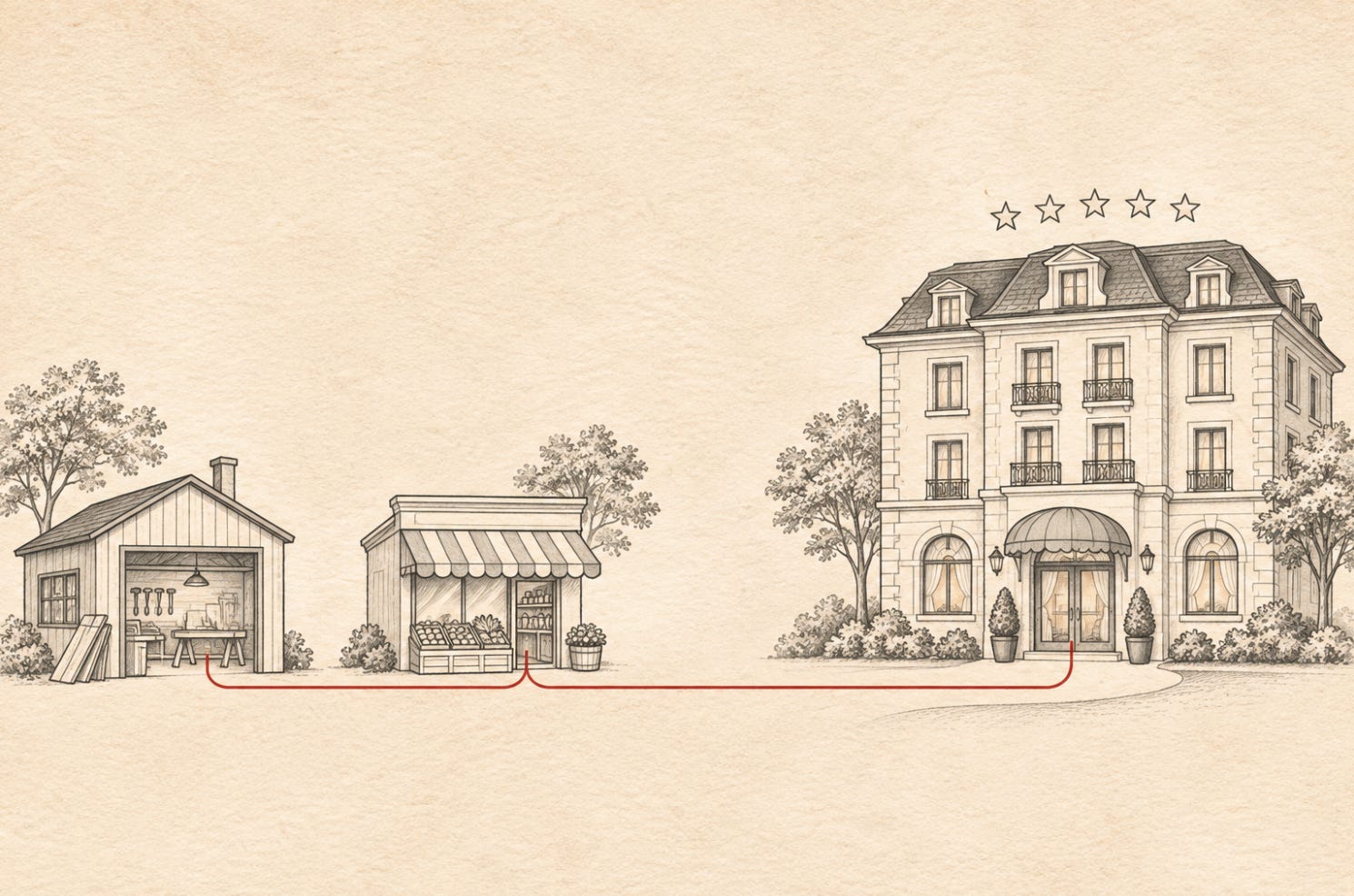
A province without a five-star hotel is a place without a particular category of accommodation. Whether it is also a place missing an economic opportunity is a different question. That distinction deserves attention in the debate opened by Stefania De Michele’s Euronews report of 9 November. A map of hotel classifications is informative. It is not, on its own, a development strategy.
Drawing on Demoskopika estimates for 2025, the report puts direct tourist spending associated with five-star and five-star luxury hotels at €10.4 billion. It also describes a strongly concentrated market: 17 provinces account for 79.2 per cent of luxury overnight stays, while 25 have no five-star hotel. These are estimates and accommodation categories, not a measurement of how much prosperity stays in each community. Source: Euronews.
That last distinction is crucial. Visitor expenditure can support wages, purchases and investment, but its local effects depend on where supplies come from, how businesses operate and who receives the income. A high spending figure does not automatically reveal the quality of employment or the share reaching nearby producers. Those questions require different evidence.
Nor should a blank space on the five-star map be treated as an instruction to build. A destination might have demand that is poorly served. It might instead lack transport, staff housing, reliable year-round services or a convincing reason for visitors to stay. Adding rooms before understanding those conditions risks confusing the visible asset with the economic system that makes it work.
The reverse argument is equally simplistic. High-end hospitality is not inherently detached from its surroundings. It can create demand for skilled work and distinctive local products. But those links should be designed and tested rather than presumed from a hotel’s classification. A credible project should explain how its benefits reach beyond its boundary and how its operating calendar fits the place around it.
For public authorities, the practical question is therefore not how to fill every gap on a luxury map. It is which forms of hospitality complement the local economy, what infrastructure they require and whether the expected gains justify public support. Some places may have a persuasive case for new high-end supply. Others may obtain more value by improving the businesses and services already there.
THE ITALIC VIEW
Italy is good at turning a ranking into an ambition: if somewhere else has more stars, perhaps we need more stars too. But the relevant measure is not simply the category of the hotel. It is whether tourism makes the surrounding place more economically capable. Luxury can contribute to that outcome. It cannot be used as a shortcut for proving it.