
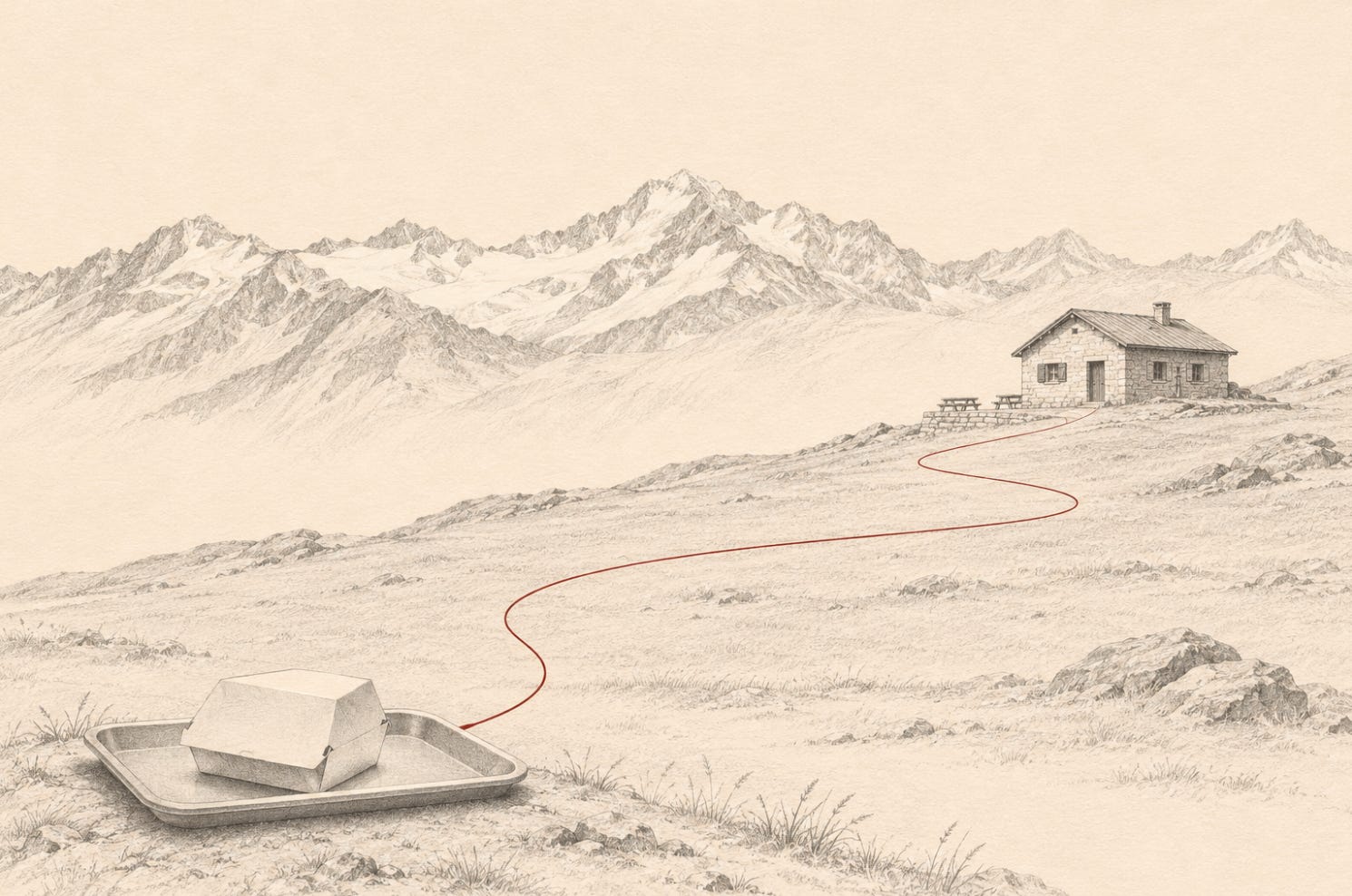
The proposed KFC presence at Cortina has become smaller than the image that helped ignite the controversy. Faloria Spa says the mountain refuge will retain its existing appearance, with no external branding changes. The company says the rendering circulated without its board’s prior approval. Six KFC products are still planned for the existing bar-cafeteria, alongside its other offerings. That is a narrower proposition than transforming the refuge into a branded fast-food restaurant.
The clarification changes the story. It does not eliminate the question behind it: how should a mountain destination decide which commercial changes belong in its landscape?
An altered façade, a new restaurant and additional products inside an existing bar are different interventions. They deserve different scrutiny. Treating them as interchangeable makes a controversy easier to sustain, but makes the actual decision harder to understand. The Cortina clarification should also not be assumed to settle the separate proposal at Madonna di Campiglio.
The most useful part of Faloria’s response concerns authority. A promotional rendering can make a proposal appear settled before the people responsible for the building have approved it. Once circulated, that image acquires a public life of its own: supporters defend it, opponents condemn it and everyone starts discussing a landscape that may never exist.
There is a legitimate reason to protect the appearance of a mountain refuge. Its architecture and relationship with its surroundings form part of a shared experience, extending beyond the preferences of whoever operates the bar. Clear approval procedures give that protection practical meaning. Outrage is a less reliable planning instrument.
Yet the nationality of a menu remains an incomplete measure of local value. An Italian name does not tell a visitor where ingredients come from, how employees are treated or how waste is managed. An international brand does not answer all those questions either. They require information about the particular operation.
For anyone concerned about the gradual standardisation of mountain destinations, this is where the debate could become more demanding. Which businesses maintain relationships with local producers? What changes require permission? What does the destination offer people who cannot afford its most expensive hospitality? These are proposed tests, rather than findings about the operators involved.
Protecting distinctiveness also means deciding what should be allowed to evolve. A living destination cannot be preserved simply by requiring every commercial choice to resemble a visitor’s preferred memory. Equally, commercial novelty does not acquire a right to alter a landscape merely because it can generate publicity.
THE ITALIC VIEW
Cortina’s clarification deserves to replace the original promotional image at the centre of the story. The exterior makeover has been rejected; the limited menu presence remains planned. RAI’s subsequent reporting confirms that distinction.
The wider lesson concerns how places govern change. Architecture, permissions and commercial agreements should be clear before the rendering becomes the announcement.
Mountain identity deserves consistent standards applied to every operator. Otherwise, defending a landscape risks becoming an argument about the most conspicuous logo, while less photogenic questions about how tourism works escape attention.